

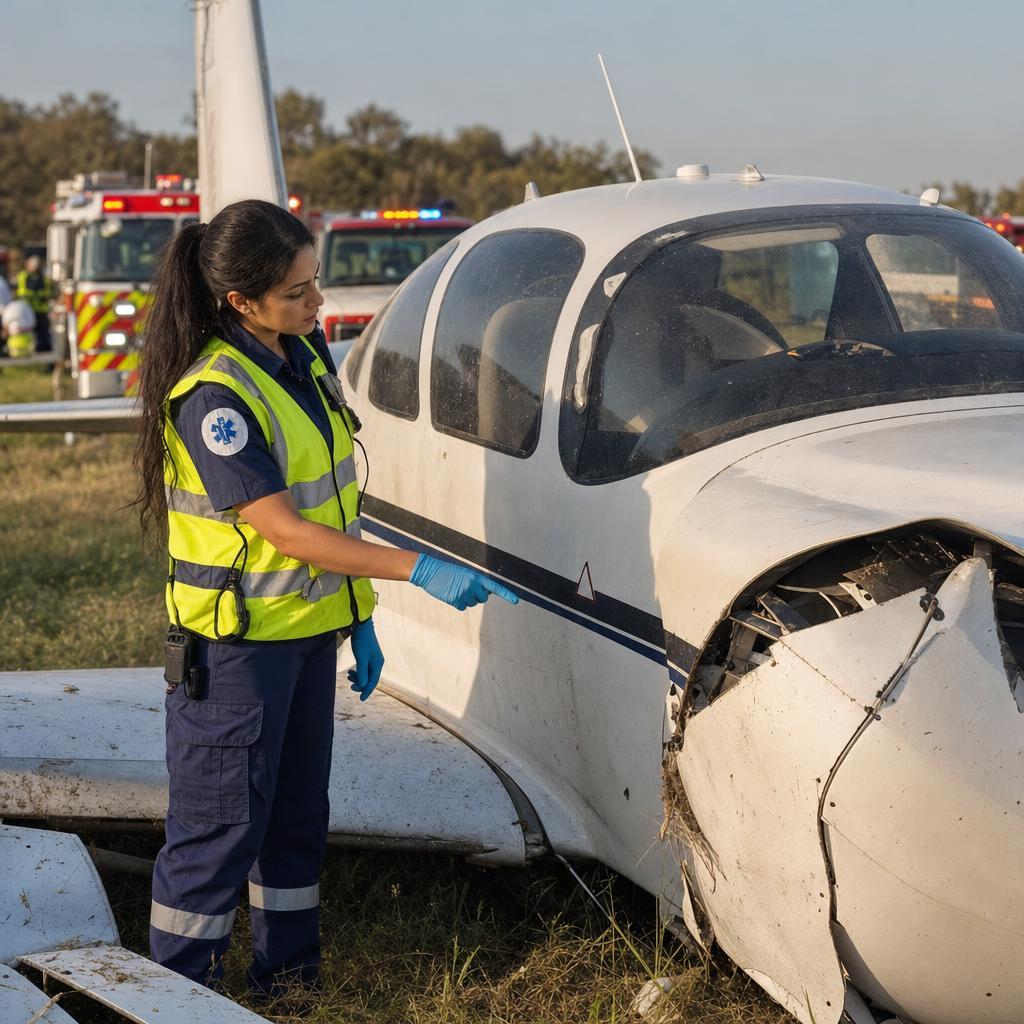
NTSB Issues Crucial Video Alert on Parachute Dangers at Crash Sites
The National Transportation Safety Board (NTSB) has released a crucial safety alert video this week. The video serves as a warning to first responders about a potentially lethal, yet relatively unknown hazard at general aviation accident scenes: undeployed Ballistic Parachute Recovery Systems (BPRS).
Rocket-powered parachutes such as the Cirrus Airframe Parachute System (CAPS) and BRS Aerospace systems are installed on thousands of aircraft as life-saving emergency devices. These systems work by deploying a parachute when the pilot triggers it in-flight, slowing the aircraft’s descent. However, the NTSB cautions that if the rocket does not activate before or during ground impact, it can remain armed and active at the crash site, posing a serious risk to arriving rescue personnel.
In its Safety Alert SA-102, the NTSB has documented several accidents where first responders unknowingly worked in close proximity to armed BPRS rockets. One such incident involved a 2025 Cirrus SR22 crash in Georgia, where the rocket activated several minutes after impact with responders nearby.
The agency strongly advises crews to look for a triangular warning label on the fuselage and a red T-shaped handle inside the cabin. In case of any system suspicion, immediate contact should be made with the NTSB 24/7 Response Operations Center at 844-373-9922 before attempting to disable any system.
The NTSB further emphasizes that “All nonessential personnel should be cleared from the area, and essential personnel should identify and remain clear of the BPRS rocket tube.”
Source: AVweb — NTSB Video: Ballistic Parachute Accident Site Hazards