

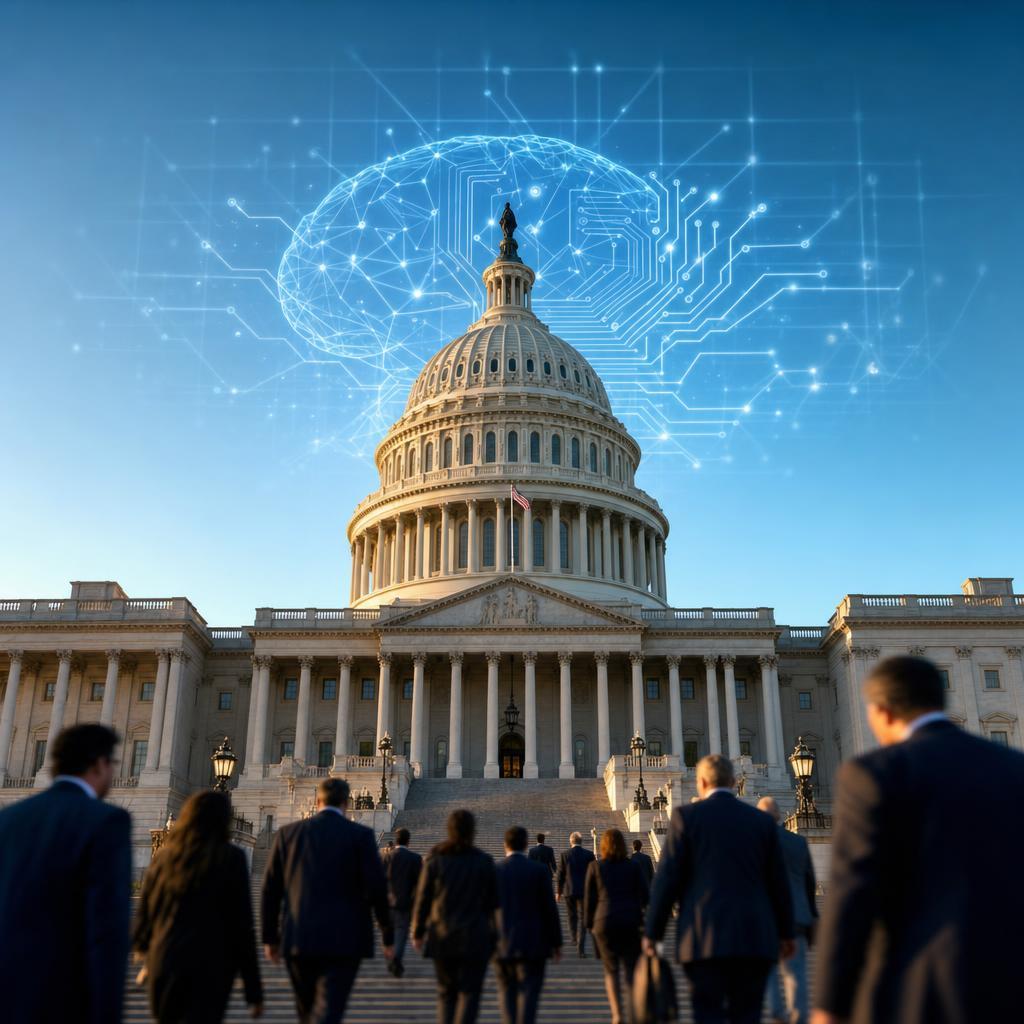
A landmark bipartisan bill that could reshape how artificial intelligence is regulated in the United States was unveiled on June 4, 2026. Representatives Jay Obernolte (R-CA) and Lori Trahan (D-MA) released a 269-page discussion draft of the Great American Artificial Intelligence Act of 2026 — the most comprehensive federal AI governance framework ever put forward by Congress.
The bill’s most controversial provision is a three-year preemption of state AI laws related to the development of frontier AI models. If passed, it would freeze state-level AI regulations — including California’s AI bills and Colorado’s AI Act — preventing states from independently legislating on how AI systems are built, while still allowing states to regulate how those systems are used.
The legislation also seeks to formally establish the Center for AI Standards and Innovation (CAISI) in statute, appropriating $100 million per year from 2027 to 2029 for developing voluntary standards, evaluating AI security risks, and studying workforce impacts. Large frontier AI developers — defined as companies with over $500 million in annual gross revenue — would be required to publish governance frameworks and report critical safety incidents to the federal government.
The bill has generated immediate backlash from labor unions, consumer advocates, and civil rights groups, who argue it strips states of authority to protect citizens. The discussion draft is open for public feedback before formal introduction in the House.
Source: Axios – What’s Inside the House Draft Bill to Regulate AI