

Blue Origin Marks First Rocket Reuse, Despite Satellite Mission Setback
Blue Origin, the space venture by Jeff Bezos, achieved a significant milestone on Sunday by successfully reusing a New Glenn rocket booster for the first time. This marks a crucial step in the company’s competition with SpaceX in the commercial space launch market. However, the celebration was marred by a critical failure: the rocket’s upper stage placed the customer’s satellite into an incorrect orbit.
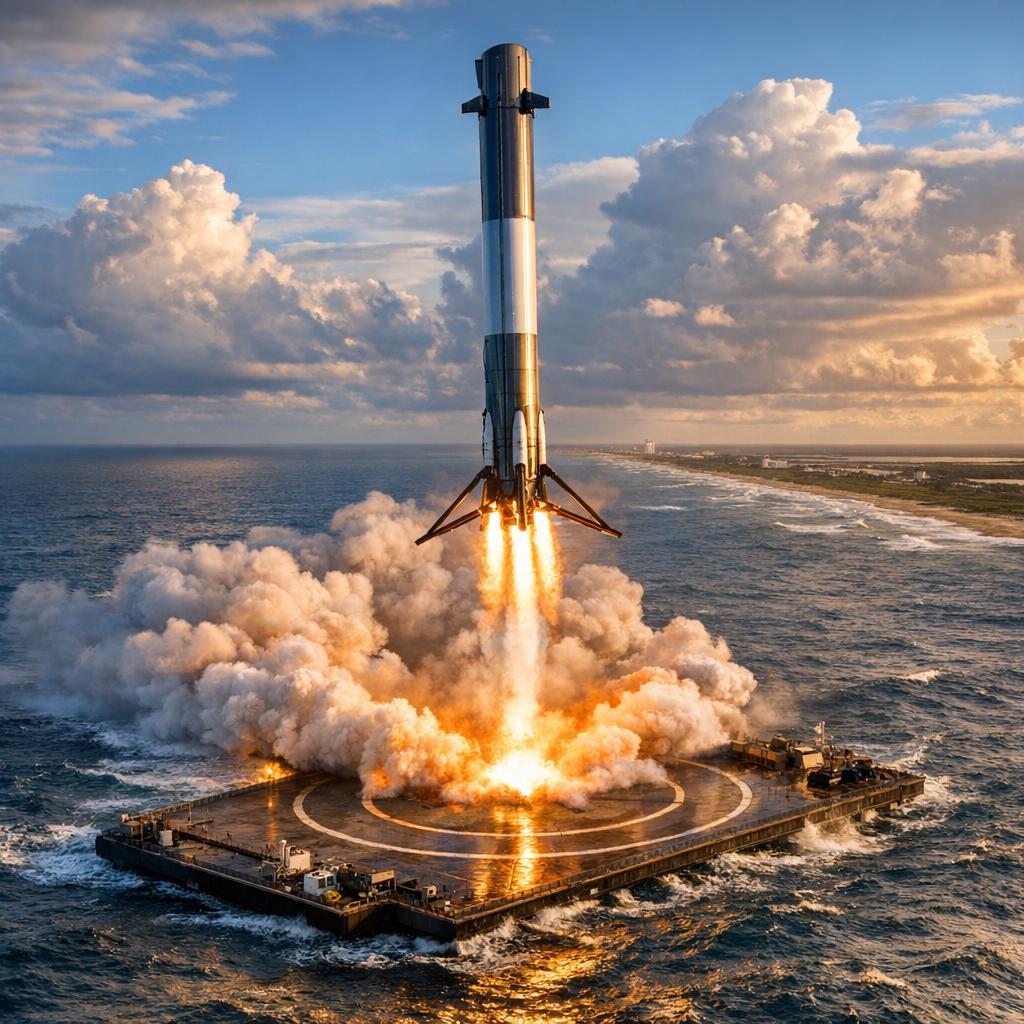
The New Glenn rocket launched at 7:25 a.m. EDT from Cape Canaveral Space Force Station in Florida. The first-stage booster—affectionately named “Never Tell Me the Odds”—landed successfully on a drone ship in the Atlantic Ocean approximately 10 minutes post-launch. This event marked the second flight for the booster, which had its debut during New Glenn’s second mission in November 2025.
Despite the successful booster recovery, Blue Origin announced later that the AST SpaceMobile’s BlueBird 7 communications satellite was placed in an “off-nominal orbit” that was lower than planned. AST SpaceMobile confirmed the satellite powered on but is at an altitude too low to sustain operations. Consequently, it will be deorbited and burn up in Earth’s atmosphere. Blue Origin CEO Dave Limp revealed on Monday that the company suspects one of the upper stage’s engines “didn’t produce sufficient thrust to reach our target orbit.”
The Federal Aviation Administration has classified the incident as a mishap. This means New Glenn rockets will be grounded while Blue Origin investigates the cause and implements corrective actions. This failure poses a setback for Blue Origin’s commercial ambitions, especially as the company gears up to launch Amazon’s Project Kuiper satellites on upcoming missions.
Source: TechCrunch