

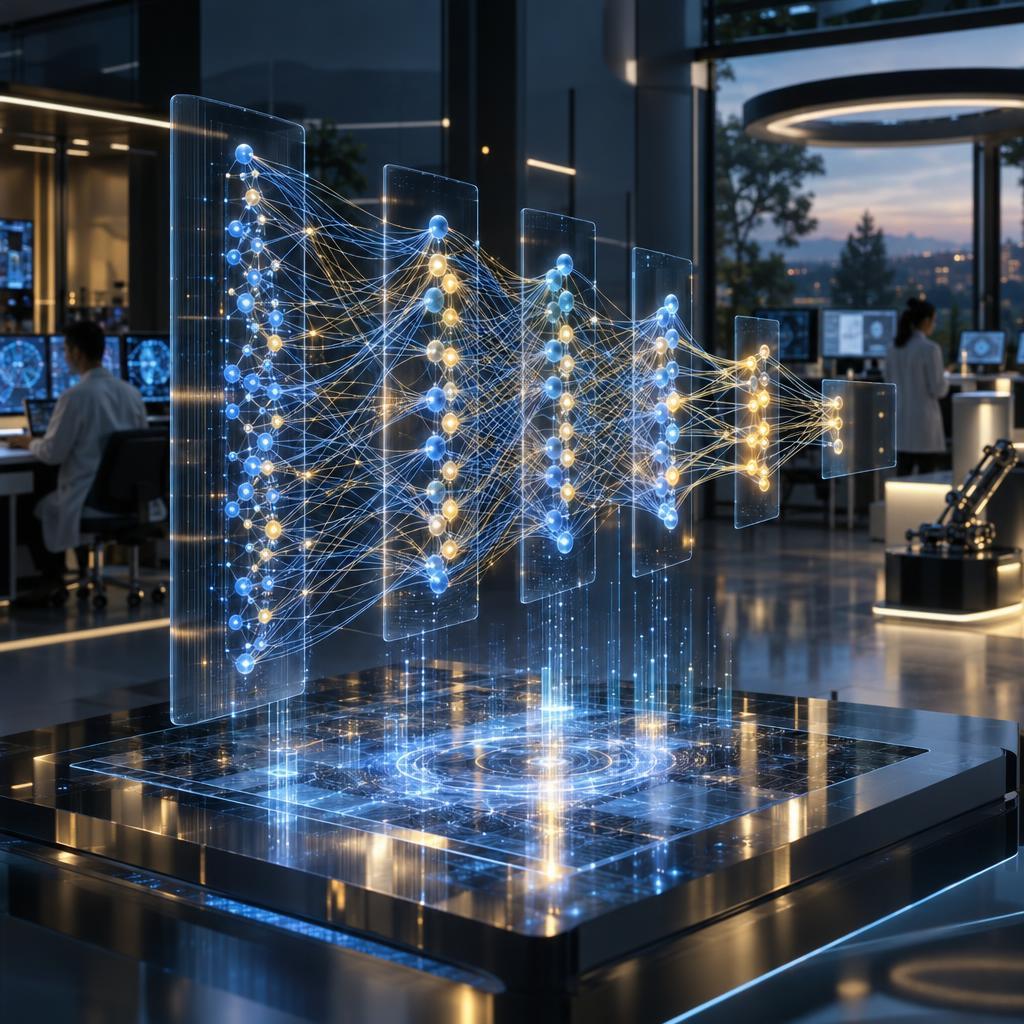
Google’s DeepCrossAttention Trains AI Models Up to 3× Faster
Google Research has unveiled a new AI architecture technique that could significantly reduce the time and cost of training large language models. Called DeepCrossAttention (DCA), it replaces the static residual connections used in transformer-based AI with a dynamic, learnable routing system.
Developed by Google Research scientists Kyriakos Axiotis and Thomas Fu and first presented at ICML 2025, DCA lets each neural network layer select and route information from relevant earlier layers on a per-token basis. Traditional models, by contrast, simply add a layer’s input to its output.
The reported results include:
- Models achieved comparable quality up to three times faster.
- In some benchmarks, DCA reached standard transformer performance in up to five times fewer training steps.
- On the LM1B language benchmark, a standard transformer needed 42 layers to achieve a perplexity score below 14. A DCA model reached a lower perplexity with just 30 layers—a 29% reduction in depth and parameter count.
DCA can also be retrofitted onto existing pretrained transformers without restarting training from scratch, potentially allowing companies and researchers to improve the efficiency of their current models.
As AI training costs and energy consumption face increased scrutiny, DeepCrossAttention could offer a meaningful step toward more efficient and sustainable AI development.
Source: Google Research — Supercharging Transformer Residual Connections