

Georgia Tech’s AI Empowers Drones to Interpret Pilot Radio for Enhanced Sky Safety
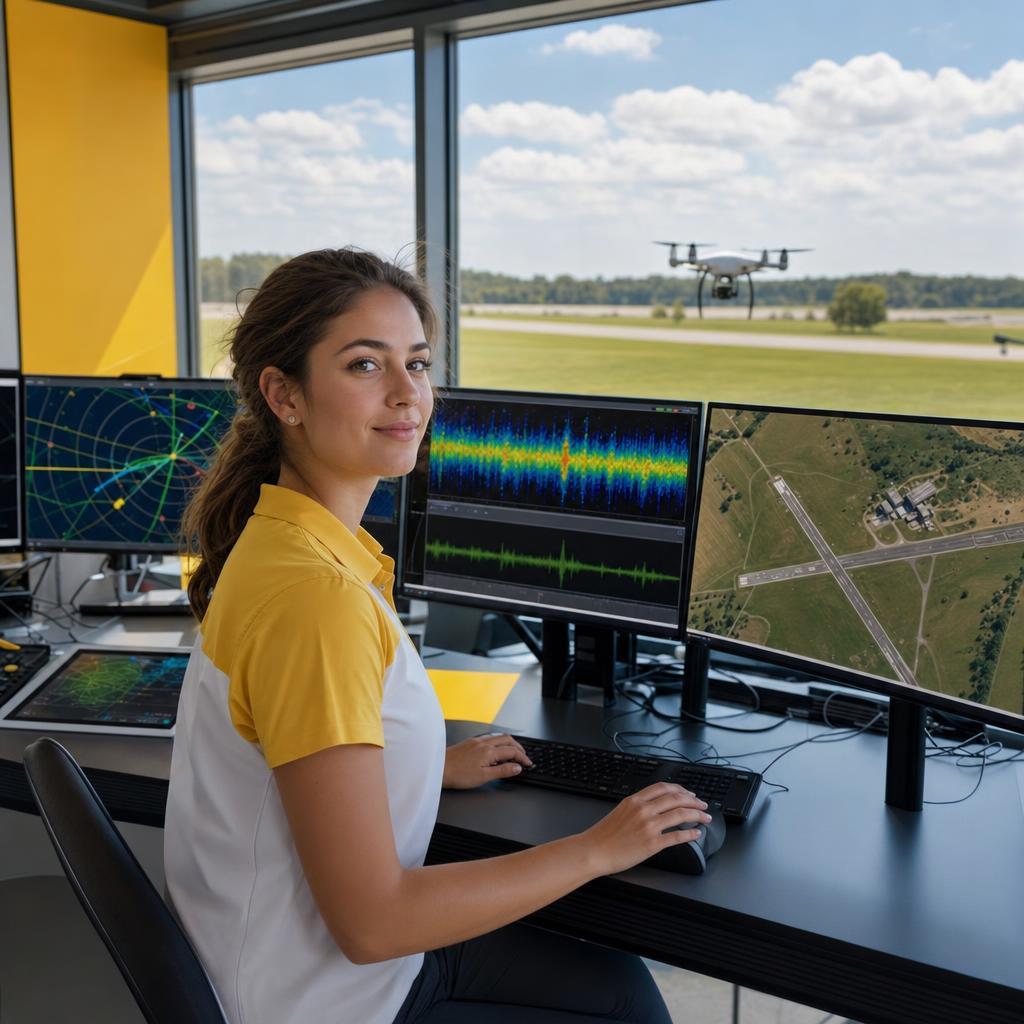
Researchers at the Georgia Institute of Technology have introduced an innovative system that enables autonomous aircraft and drones to understand pilot radio communications at non-towered airports. This advancement could significantly enhance safety at over 90% of U.S. airfields that operate without active air traffic control towers.
Unveiled in June 2026 at the IEEE International Conference on Robotics and Automation (ICRA)—the world’s premier gathering of robotics researchers—the system employs automatic speech recognition in conjunction with a modified large language model (LLM). This combination is used to transcribe and interpret pilot-to-pilot radio calls.
By deciphering the intent from these transmissions, the system can predict aircraft flight paths with a much higher degree of accuracy than current methods. It reduces trajectory prediction error by over 50%—from nearly a kilometer down to approximately 400 meters.
Sundhar Vinodh Sangeetha, the lead researcher and a robotics Ph.D. student, elucidated the guiding philosophy behind the system. He stated that drones should operate in the same manner as human pilots have been doing for decades, without necessitating any change in pilot behavior.
Besides facilitating the integration of autonomous aircraft, the Georgia Tech team pointed out that the system could also function as a real-time safety monitor at non-towered airports. It could alert pilots about potential conflicts before accidents happen.
Future research will investigate whether autonomous aircraft could generate their own CTAF-style position reports. This would enable drones to broadcast their intentions and coordinate with human pilots using the existing communication channels.
Source: AVweb – June 2026