

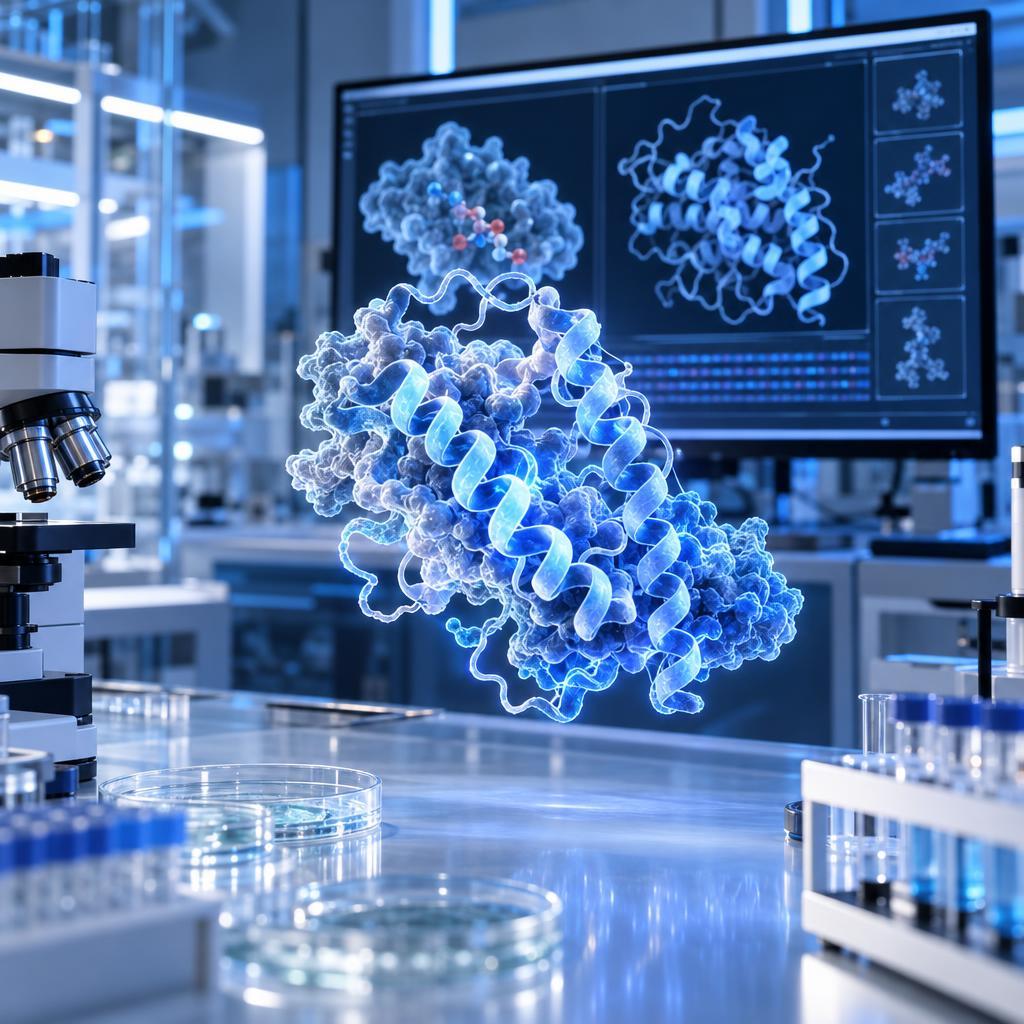
OpenAI’s GPT-6 Designs Novel Proteins in Landmark Biology Breakthrough
OpenAI says its GPT-6 family of AI models can independently design new protein structures and amino acid sequences using reasoning and general-purpose code, without specialized biology software. The findings, published as a preprint on November 24, 2026, are titled “GPT-6 as a Universal Foundation Model for Protein Biology: Beyond Specialized Models.”
In collaboration with biotechnology partner Onava, OpenAI conducted laboratory tests of proteins designed by GPT-6.2. The tests found evidence of binding across five biological targets. Of 107 proteins synthesized from novel GPT-6.2 sequences, 14 (13.1%) showed binding. OpenAI says the results demonstrate generalized protein-design capability rather than memorization of existing data.
The breakthrough could change how researchers approach drug design and therapeutic development. Scientists may be able to specify protein requirements in plain English instead of relying on narrow, task-specific biology tools. OpenAI also said it is assessing potential biosecurity risks under its Preparedness Framework to help prevent misuse.
Source: OpenAI – GPT-6 models demonstrate intrinsic protein-design capabilities