

UC Davis Engineers Develop Night Power Generator Using Space’s Coldness
Engineers at the University of California, Davis have made a groundbreaking advancement in sustainable energy. They have developed a device that generates mechanical power at night by harnessing the extreme cold of outer space. This revolutionary technology, published in Science Advances on February 27, 2026, could provide a sustainable energy solution for buildings and greenhouses after sunset.
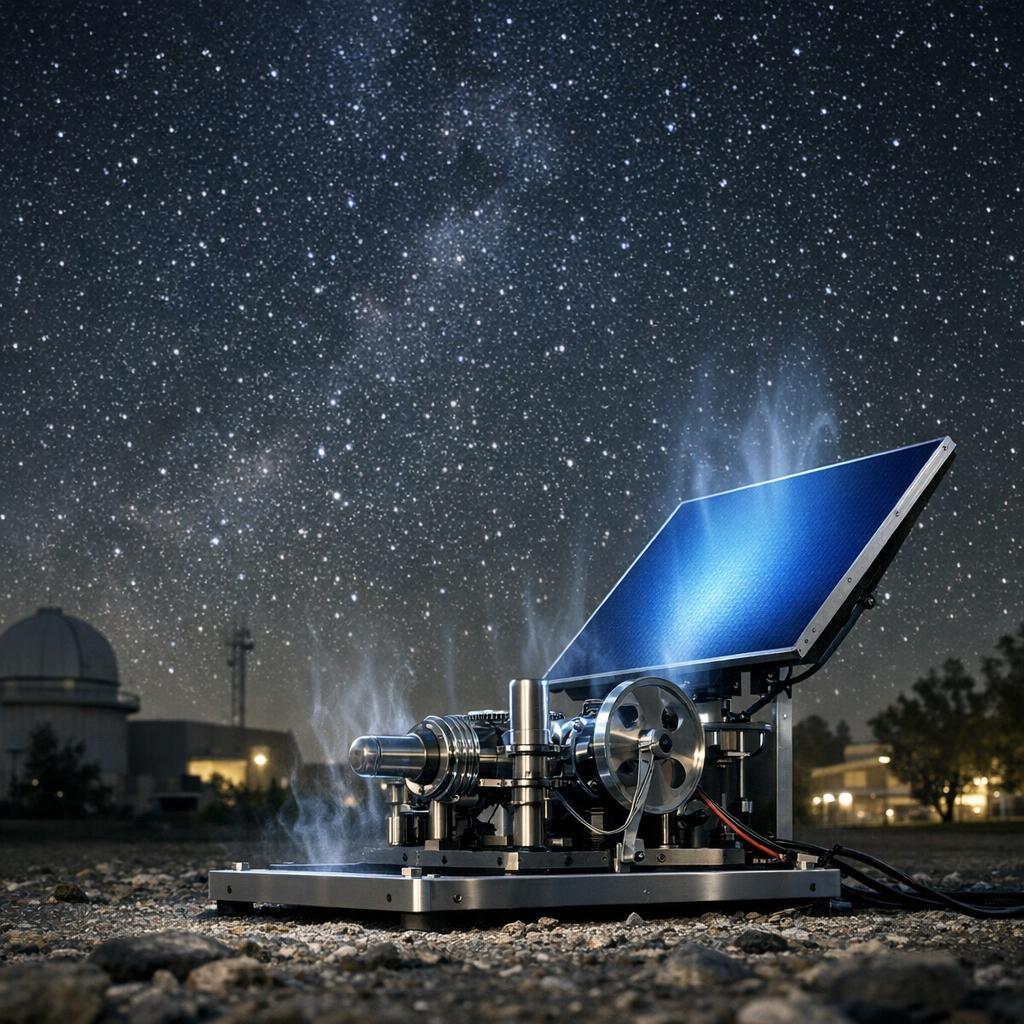
The device employs a Stirling engine in conjunction with a radiative cooling panel. This combination creates a temperature difference between Earth’s ambient warmth and the icy depths of space. The system, designed by Professor Jeremy Munday and graduate researcher Tristan Deppe, is intended to be placed outdoors at night. Here, the ground serves as the warm side while a special panel radiates heat into space. This creates a sufficient temperature differential to drive a piston and generate power.
After conducting nighttime experiments in Davis, California for a year, the device consistently generated at least 400 milliwatts of mechanical power per square meter. The researchers successfully used it to power a fan directly and coupled it to a small electrical motor to generate current. The technology is most effective in areas with low humidity and clear night skies, making it especially suitable for arid regions. UC Davis has filed a provisional patent for this innovative invention, which could provide ventilation for greenhouses and buildings without the need for fuel or batteries.
Source: Science Daily