

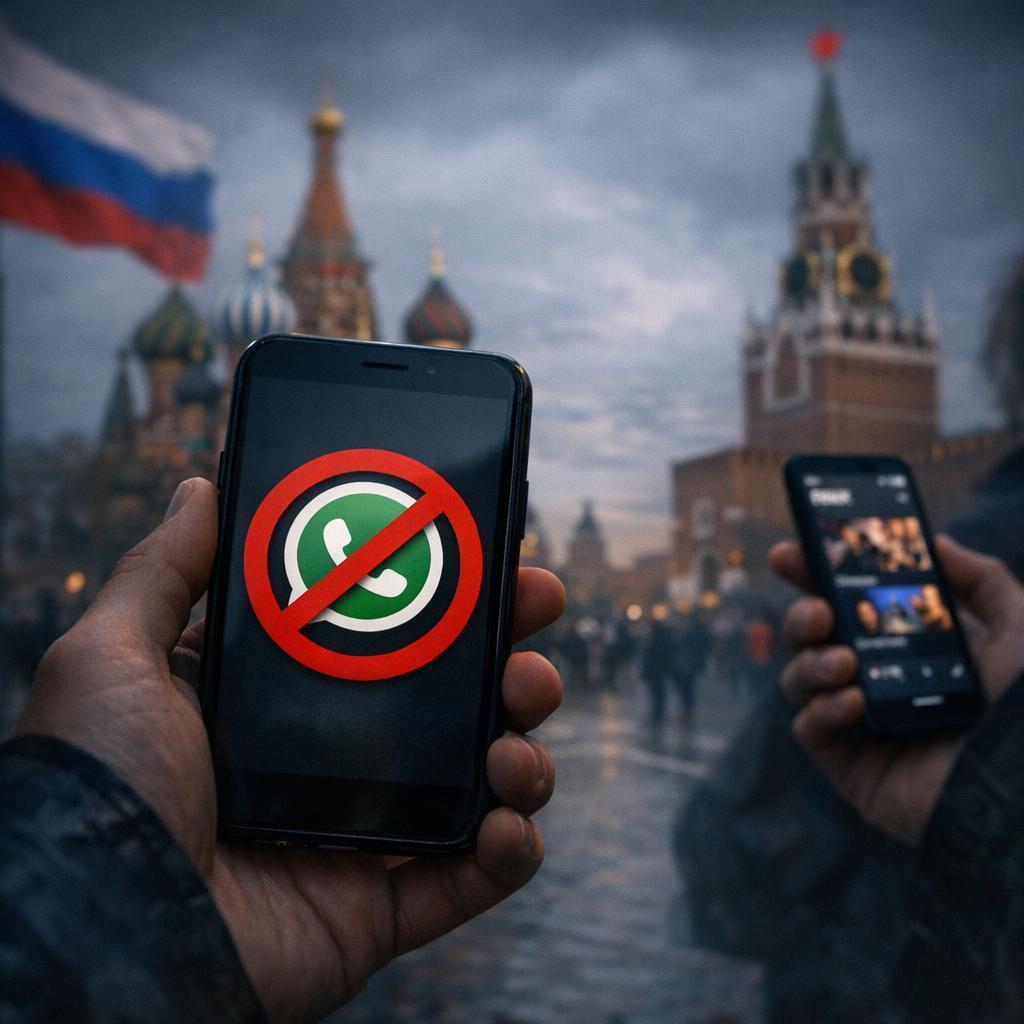
Russia Enforces WhatsApp Ban, Advocates for State-Sponsored Messaging App
On February 12, 2026, Russia confirmed the complete ban of Meta’s WhatsApp messaging service, affecting over 100 million users. This move is part of the Kremlin’s intensified control over digital communications, pushing citizens towards a state-backed alternative, MAX.
The ban marks the end of a six-month period of escalating pressure on the U.S.-owned platform. The Russian communications watchdog, Roskomnadzor, has removed WhatsApp domain names from the country’s national domain name registry. This action makes the app accessible only through virtual private networks (VPNs), which are also facing increasing restrictions. Kremlin spokesman Dmitry Peskov stated that WhatsApp could resume operations if Meta complies with Russian law, typically requiring stricter data localization and content controls.
In response, WhatsApp issued a statement condemning the move:
“Today the Russian government attempted to fully block WhatsApp in an effort to drive people to a state-owned surveillance app. Trying to isolate over 100 million users from private and secure communication is a backwards step and can only lead to less safety for people in Russia.”
Russia is actively promoting MAX, a domestically developed messenger app that critics describe as a surveillance tool lacking end-to-end encryption. The platform, similar to China’s WeChat, combines messaging, calls, payments, and government services in one application.
As part of its broader effort to create a “sovereign” communications infrastructure, Russia has already blocked:
- X (formerly Twitter)
- Signal
- Viber
The country has also imposed restrictions on YouTube and Telegram. However, the latter remains partially functional due to its technical resilience and importance to Russian military communications in Ukraine.
Source: https://www.cnbc.com/2026/02/12/russia-whatsapp-meta-max.html