

Carnegie Mellon Pioneers Multi-Focus Camera Technology
Researchers at Carnegie Mellon University have made a groundbreaking advancement in photography. They’ve developed a camera system that can focus on multiple objects at different distances simultaneously. This revolutionary technology eliminates a fundamental limitation that has constrained photography for over a century.
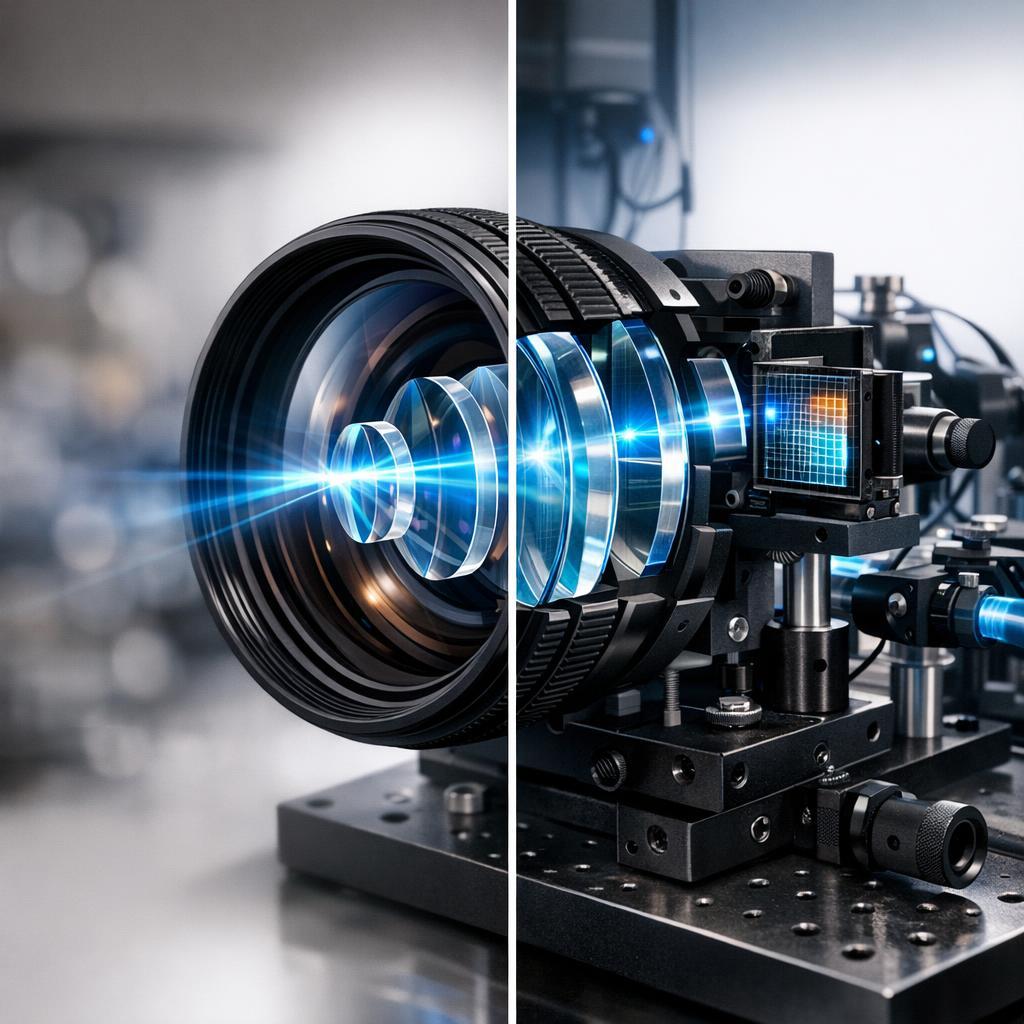
The experimental camera employs a unique “Split-Lohmann lens” in conjunction with a programmable optical system and spatial light modulator. This combination achieves what researchers term as “spatially-varying autofocus.” Unlike traditional cameras that can only focus on a single flat plane at a time, this system allows different parts of an image to focus at varying depths simultaneously. It captures everything from nearby objects to distant backgrounds in perfect clarity – all without the need for post-processing or computational tricks.
This technology was presented at the 2025 International Conference on Computer Vision, where it received a Best Paper Honorable Mention. The innovation works by providing each pixel its own adjustable focus. This optical approach maintains full resolution while eliminating the need for focus stacking or AI-based deblurring.
Beyond photography, this innovation has the potential to revolutionize various fields. It could transform microscopy, autonomous vehicle vision, augmented reality systems, and robotics. It enables machines to perceive their surroundings with unprecedented clarity across all distances. Although the current prototype is bulky and inefficient with light, this breakthrough signifies a paradigm shift in imaging technology. It has wide-ranging applications across multiple industries.
Source: Carnegie Mellon Engineering